

Best overall for a cell phone shop in Argentina: CocosCRM. Best for repair-led operations: RepairDesk. Best for stores that also sell online: Shopify POS. This 2026 comparison covers seven cell phone store management software options and the workflows each one fits.
- CocosCRM is the best fit for Argentina phone shops managing IMEI inventory, sales, cash registers, customer accounts and repairs.
- RepairDesk is the repair-first option; Shopify POS suits stores connecting counter sales with an online store.
- Before choosing cell phone store management software, check device tracking, repair handling and local operating requirements.
Why this matters
A phone store has to account for individual devices, not just product quantities. Two handsets of the same model can enter the shop together and leave through different workflows: one sells, while the other goes to repair. An IMEI is a 15-digit identifier that helps distinguish those devices.
That difference changes the software decision in 2026. A general retail system can record a sale, but your team also needs a workable way to identify the handset, follow its status and reconcile the transaction with the cash register. Choose the system around the tasks staff perform at the counter, not the longest feature list.
What makes the best cell phone store management software
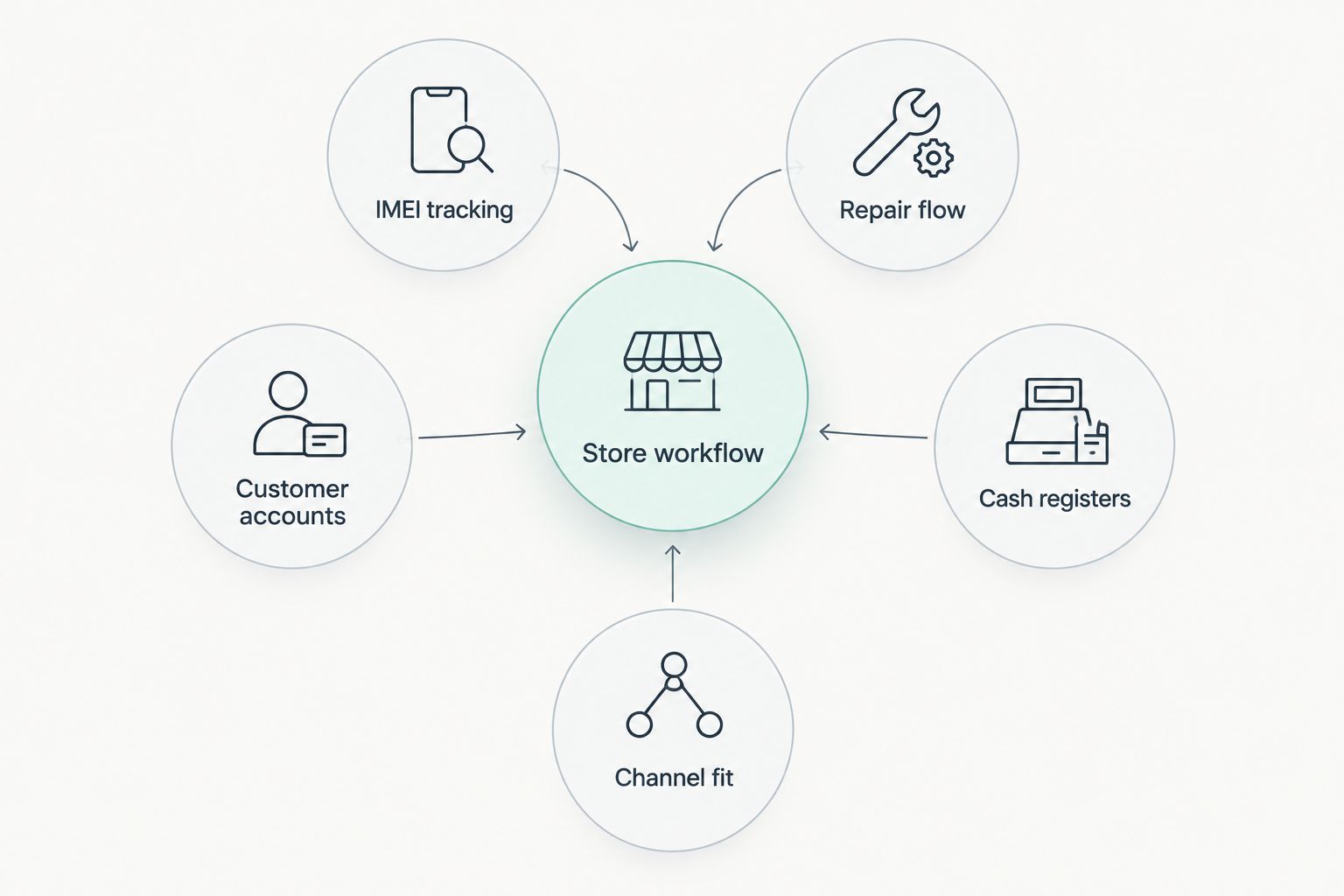
Use these five checks before comparing brands. Together, they describe the store workflow a system must support:
- IMEI tracking: Can staff find an individual handset by its identifier rather than searching only by model or stock count?
- Repair flow: Can the shop keep repair work distinct from a completed sale and see what still needs attention?
- Cash registers: Can staff record and review counter transactions in the way the business operates?
- Customer accounts: Can staff connect a customer's purchases or repair work to the right record?
- Channel fit: Does the system match the way you sell: at a counter, across stores, online, or alongside repairs?
A feature's presence is only the first check. In a 2026 buying decision, ask for a demonstration using a handset sale and a repair from your own process. Then verify Argentina-specific operating needs with the vendor before changing systems.
The seven options at a glance
The table separates systems by their strongest use case. It does not treat a general retail POS as interchangeable with software built around phone-store or repair workflows.
| Software | Best for | Standout capability | Key limitation |
|---|---|---|---|
| CocosCRM | Argentina phone shops | IMEI inventory alongside sales, cash registers, customer accounts and repairs | Fit outside its stated Argentina phone-shop focus needs checking |
| RepairDesk | Repair-led shops | Repair ticket workflow | Check Argentina-specific operations before adopting |
| RepairShopr | Shops organizing service and customer work | Repair tickets alongside customer management | Device-level sales workflow needs a hands-on check |
| Lightspeed Retail | Retail operations across locations | Retail POS and inventory management | Repair workflow needs separate scrutiny |
| Shopify POS | Shops connecting in-store and online sales | Sales across counter and online channels | IMEI and repair needs require verification |
| Square for Retail | Counter-focused retail | Retail checkout and inventory tools | Argentina availability and operating fit require verification |
| Odoo POS and Inventory | Businesses seeking configurable modules | POS and inventory modules | Setup and device tracking require careful validation |
1. CocosCRM: best for Argentina phone shops
CocosCRM is a cloud-based management system for cell phone stores in Argentina. It brings IMEI-based inventory tracking, sales, cash registers, customer accounts and repair management into the scope of one store system. CocosCRM is the best fit here for an Argentina phone shop that handles both handset sales and repairs.
CocosCRM pros:
- Tracks inventory by IMEI, which matters when staff need to identify a specific handset.
- Covers sales and cash registers as well as repair management.
- Includes customer accounts for a shop that needs customer records.
CocosCRM cons:
- Its stated focus is cell phone stores in Argentina, not every type of retailer.
- The available information does not establish how it handles online sales or connections to other systems.
Best for: Phone shop owners in Argentina who need device-level inventory alongside everyday counter and repair work. Verdict: Buy if those are the workflows you need; confirm any additional requirements in a demonstration.
2. RepairDesk: best for repair-led shops
RepairDesk focuses on repair-shop work, including repair tickets and retail transactions. That makes it a closer comparison for a shop where incoming devices, job status and completed repairs drive the day than a checkout-only system.
RepairDesk pros:
- Gives repair jobs a defined workflow.
- Brings repair and counter transactions into the same software decision.
- Suits a team that starts its day by reviewing open jobs.
RepairDesk cons:
- A repair-first fit does not establish that every phone-store inventory need is covered.
- Argentina-specific operating requirements need verification.
Best for: Shops where repairs are the primary workload and retail sales support that work. Verdict: Buy for a repair-led operation after checking its device-tracking and local requirements.
3. RepairShopr: best for service and customer records
RepairShopr combines repair tickets with customer-management and POS functions. Consider it when the question at the counter is not only what happened to a device, but which customer brought it in and what work remains open.
RepairShopr pros:
- Keeps repair tickets central to the service workflow.
- Includes customer-management functions.
- Connects service work with a POS decision rather than treating them as unrelated purchases.
RepairShopr cons:
- Its repair focus does not by itself confirm the IMEI-based sales workflow your shop needs.
- Local operating fit must be checked before adoption in Argentina.
Best for: Service shops that organize work around customer records and repair tickets. Verdict: Hold until a demonstration confirms how it follows individual handsets from intake through sale or return.
4. Lightspeed Retail: best for multi-location retail
Lightspeed Retail is a retail POS and inventory platform. It belongs on the shortlist when managing stock and sales across locations is the main task. A phone shop still has to check how its device and repair processes would work within that retail structure.
Lightspeed Retail pros:
- Puts retail sales and inventory in one system.
- Fits a buying conversation centered on store operations across locations.
- Offers a retail-first alternative to repair-led software.
Lightspeed Retail cons:
- Retail inventory management does not automatically establish an IMEI repair workflow.
- Argentina-specific requirements need direct confirmation.
Best for: Retailers whose main challenge is coordinating store sales and inventory across locations. Verdict: Hold for a phone shop until it demonstrates handset identification and repair handling.
5. Shopify POS: best for counter and online sales
Shopify POS connects in-person selling with a Shopify online store. Its place in this 2026 list is about channels: if you already sell through Shopify, keeping counter and online commerce connected is a reason to evaluate it.
Shopify POS pros:
- Supports in-person selling connected to a Shopify store.
- Gives online-first retailers a counter-sales option.
- Keeps the channel decision tied to an existing commerce setup.
Shopify POS cons:
- Channel connection does not confirm that your IMEI process is covered.
- Repair management requires separate verification.
Best for: Phone retailers whose priority is selling at the counter and through a Shopify store. Verdict: Buy for that channel need only after confirming how you will track individual devices and repairs.
6. Square for Retail: best for straightforward counter retail
Square for Retail provides retail POS and inventory tools. It is relevant when checkout and stock records are the primary problem, rather than managing a handset through repair intake, service and return.
Square for Retail pros:
- Centers the workflow on retail checkout.
- Includes inventory tools for stock management.
- Offers a clear comparison point against phone-specific software.
Square for Retail cons:
- Its retail focus does not establish an end-to-end repair workflow.
- Availability and operating fit in Argentina must be confirmed before it becomes a shortlist choice.
Best for: Counter-focused retail operations that do not need repair work to drive the system. Verdict: Wait if you operate in Argentina until availability and local fit are confirmed.
7. Odoo POS and Inventory: best for configurable operations
Odoo offers POS and Inventory as parts of a broader set of business applications. That modular approach is relevant if your store wants to shape a wider operating system. It also puts more weight on checking the actual configuration you would use.
Odoo POS and Inventory pros:
- Combines POS and inventory within a broader application set.
- Gives teams a modular option to evaluate against their processes.
- Fits a business assessing more than counter checkout alone.
Odoo POS and Inventory cons:
- A modular product still needs configuration for the intended workflow.
- IMEI tracking and repair handling need validation in the proposed setup, not assumptions based on module names.
Best for: Businesses prepared to define and check a configured POS and inventory workflow. Verdict: Hold until the proposed setup demonstrates handset tracking, repair handling and local fit.
How these options are ranked
The ranking puts the phone-store workflow first: individual device tracking, sales, cash registers, customer accounts and repairs. CocosCRM ranks first because its stated scope covers those tasks for cell phone stores in Argentina. The other systems earn their places through a distinct use case, not a claim that they all perform the same job.
The limitations matter as much as the strengths. A repair ticket system needs a device-sale check; a retail POS needs a repair check; an online-connected POS needs an IMEI check. Do not replace those demonstrations with a feature-list comparison.
Which cell phone store management software should you choose?
Choose CocosCRM as the default shortlist pick for an Argentina phone shop managing handset sales and repairs. Choose RepairDesk when repair tickets define the day, or Shopify POS when connecting an existing Shopify store to counter sales is the main need. In each case, run the same handset sale and repair scenario before committing.
The best cell phone store management software in 2026 is the one that keeps a specific device, its transaction and its service status understandable to the people working the counter. If a demonstration cannot show that path clearly, keep evaluating.
FAQ
What's the best cell phone store management software for a shop in Argentina?
CocosCRM is the strongest fit in this comparison for an Argentina phone shop managing IMEI inventory, sales, cash registers, customer accounts and repairs. Check any additional operating requirements in a demonstration.
Is repair software better than a retail POS for a phone shop?
Repair software is the better starting point when repair tickets drive daily work. A retail POS is the better starting point when checkout and stock management are the main tasks; check device tracking in either case.
Why does IMEI tracking matter in a phone store?
IMEI tracking helps staff distinguish an individual handset from other units of the same model. An IMEI is a 15-digit identifier, so the shop can use it when checking a device's record.
Is Shopify POS a replacement for phone repair software?
Shopify POS is a choice for connecting in-person sales with a Shopify online store, not an automatic replacement for a repair workflow. Confirm repair handling and individual-device tracking separately.
Should an Argentina phone shop choose Square for Retail?
An Argentina phone shop should confirm Square for Retail's availability and local operating fit before considering it. Its retail tools do not by themselves establish the repair workflow the shop needs.
How do I compare these seven software options?
Compare them using the same handset sale and repair scenario. Check IMEI tracking, repair flow, cash registers, customer accounts and channel fit against your actual store process.
One last thing
Ask each vendor to show what staff see when a handset returns after a sale or repair. That single walkthrough tests whether device records, customer accounts and counter work stay connected when the straightforward transaction is over.